Where Luotian sits and why the pace feels different
Luotian County lies in the eastern part of Hubei, on the southern side of the Dabie Mountains and within the wider Huanggang region. It is not a city built around one monumental landmark. Its character comes from the way mountains, villages, streams, farms and small towns sit close together. A day can move from a forest road to a market breakfast, from a ridge view to a family-run kitchen, without the hard transition between ‘attraction’ and ‘ordinary life’ that visitors feel in a large resort.
For an overseas guest, that landscape has two sides. It offers quiet, cooler air, space for gentle routines and a strong sense of place. It also requires more planning than a compact urban sightseeing trip. Roads wind through the hills, weather can alter walking conditions, mobile coverage may vary and the most attractive viewpoint is not always the easiest place to reach. A responsible itinerary is built around the visitor’s energy, balance, medical advice, food needs and tolerance for stairs—not around a checklist of every viewpoint.
Luotian is particularly well suited to visitors who want a few unhurried days after a hospital appointment or rehabilitation consultation. It can also work for a family travelling together: one person may take a short scenic walk, another may rest at the homestay, and companions can explore further without turning the whole schedule into a test of endurance. The county should be presented as a place for recovery-friendly living and cultural discovery, never as a cure in itself.
Tiantangzhai: ridgelines, forest and the feeling of altitude
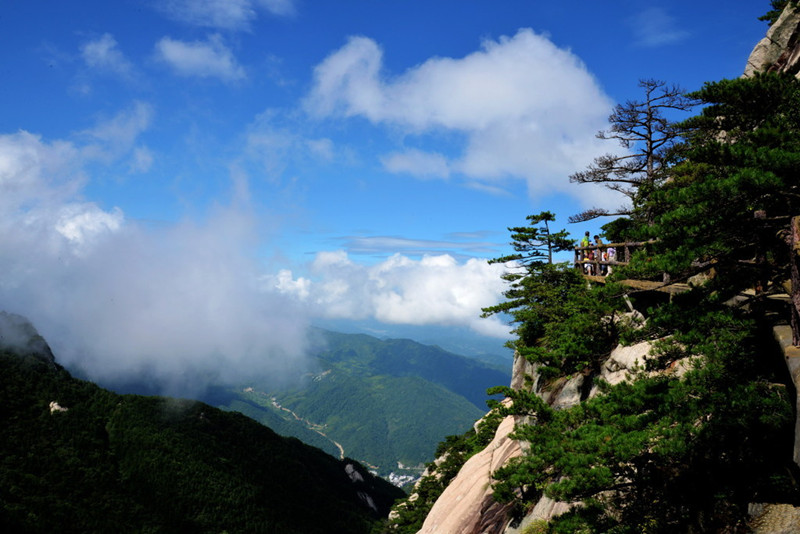
Tiantangzhai is the most dramatic mountain experience in a Luotian itinerary. The name is associated with high ridges, dense forest, stone steps, changing cloud and broad views across the Dabie landscape. On a clear day, the reward is not one single object to photograph but a sequence of changes: dark pine and hardwood forest close to the path, a sudden opening at a ridge, distant layers of blue hills, then mist returning across the valley.
The area can be approached in different ways depending on the current transport arrangements and the visitor’s ability. Some travellers prefer to reduce the initial climb with available shuttle or ropeway services and reserve their strength for a shorter viewpoint walk. Others enjoy a longer route with frequent stops. Access, queues, weather, maintenance and seasonal conditions change, so the exact route should be checked locally rather than copied from an old blog post.
Tiantangzhai is beautiful precisely because it is not a flat park. Steps, uneven surfaces, wet stone, wind and changing temperature all matter. Anyone recovering from surgery, living with joint pain, balance problems, heart or lung conditions, or significant fatigue should obtain medical advice before including it. A sensible day includes water, sun and rain protection, footwear with a secure sole, a place to rest and a clear plan for returning before the visitor is exhausted. A companion should know where the nearest transport point is and keep the schedule flexible.
Photography is best treated as a reason to pause rather than a reason to rush. Early morning mist, side light on the pines and the contrast between a narrow path and a distant ridge often produce more memorable photographs than a crowded ‘must-see’ platform. If a visitor has limited mobility, a carefully selected overlook and a quiet forest section may provide a better experience than attempting the longest trail.
Bodaofeng: an open mountain day with a different mood
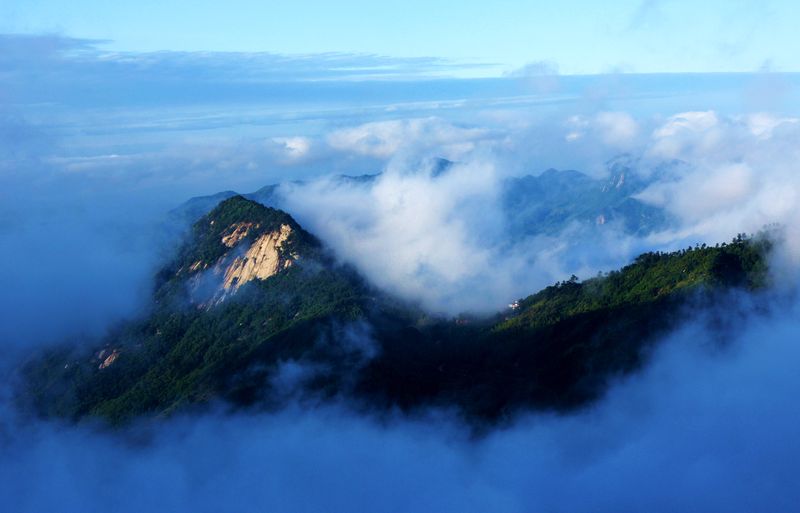
Bodaofeng, often translated as ‘Thin-Blade Peak’, is another major mountain destination associated with Luotian. Its appeal is different from Tiantangzhai. The name suggests a sharp, sculpted mountain profile, while the visitor experience is shaped by exposed rock, pines, open sightlines and the sensation of standing above a large folded landscape. It is a place for weather, distance and texture: a low cloud can erase the far view, and then a break in the sky can reveal the ridges again.
Bodaofeng rewards a little planning: confirm which gate and route are open, how much walking is required after transport, whether there are steep steps and what shelter is available. The most attractive itinerary may be a short scenic section followed by tea and lunch, not an attempt to complete every ridge.
Bodaofeng can suit visitors who enjoy viewpoints and photography but do not want a tightly scheduled city attraction. It may be less suitable on a day when the patient is dizzy, weak, in significant pain or under instructions to limit stairs. A family group can split the day: active companions continue along a longer section while the person resting in recovery returns to the homestay or chooses an accessible viewpoint.
Jiuzihe: village rhythm, water and a gentler cultural stop
Jiuzihe is useful in a Luotian programme because it changes the scale of the day. Instead of focusing only on a summit, the visitor can notice village streets, small bridges, streams, old trees, local shops, farm plots and the practical details of mountain life. The experience is less about collecting a landmark and more about allowing time for a conversation, a meal, a cup of tea or a short walk near the water.
For families, Jiuzihe can be a comfortable shared activity. Older relatives may prefer a slow village loop; children can look for seasonal produce and small riverside scenes; photographers can work with reflections, roofs, mist and everyday movement. The route still needs checking for steps, uneven paving and vehicle access, but it is easier to build a low-pressure half-day here than on a high ridge.
The best way to visit is with curiosity and restraint. Ask before photographing people, workshops or private homes. Buy local products directly when possible, listen to the host’s explanation of a dish and leave enough time to eat without rushing back to a timed attraction. These small choices make the visit feel like a relationship with a place rather than a backdrop for a medical package.
Mountain homestays: what to check before reserving
A mountain homestay can be more welcoming than a large hotel, but ‘quiet’ does not always mean accessible. Before booking, ask about the number of stairs from the parking area, the bathroom layout, shower thresholds, handrails, heating or air-conditioning, mattress firmness, night lighting, noise, Wi-Fi and whether staff can assist with luggage. If a guest is recovering from an operation, confirm that a ground-floor room and a nearby toilet are available in writing.
Food is another part of the stay. Tell the host about allergies, vegetarian or halal requirements, diabetes, swallowing difficulty, low-salt advice and any foods that should be avoided with medication. A translator can turn a general request into a practical menu conversation. It is also worth asking when dinner is served and whether a simple meal can be prepared on a day when the guest is tired after an appointment.
The atmosphere is usually part of the appeal: a balcony facing the hills, tea after rain, the sound of insects at night or a family eating around a large table. But a homestay is not a hospital. It may not have a lift, nurse, emergency equipment or a pharmacy nearby. Guests who need medical monitoring should stay close to the appropriate clinical service and treat a rural homestay as accommodation for a suitable, stable period—not as a substitute for care.
The Luotian table: diaoguo first, then chestnuts and seasonal dishes
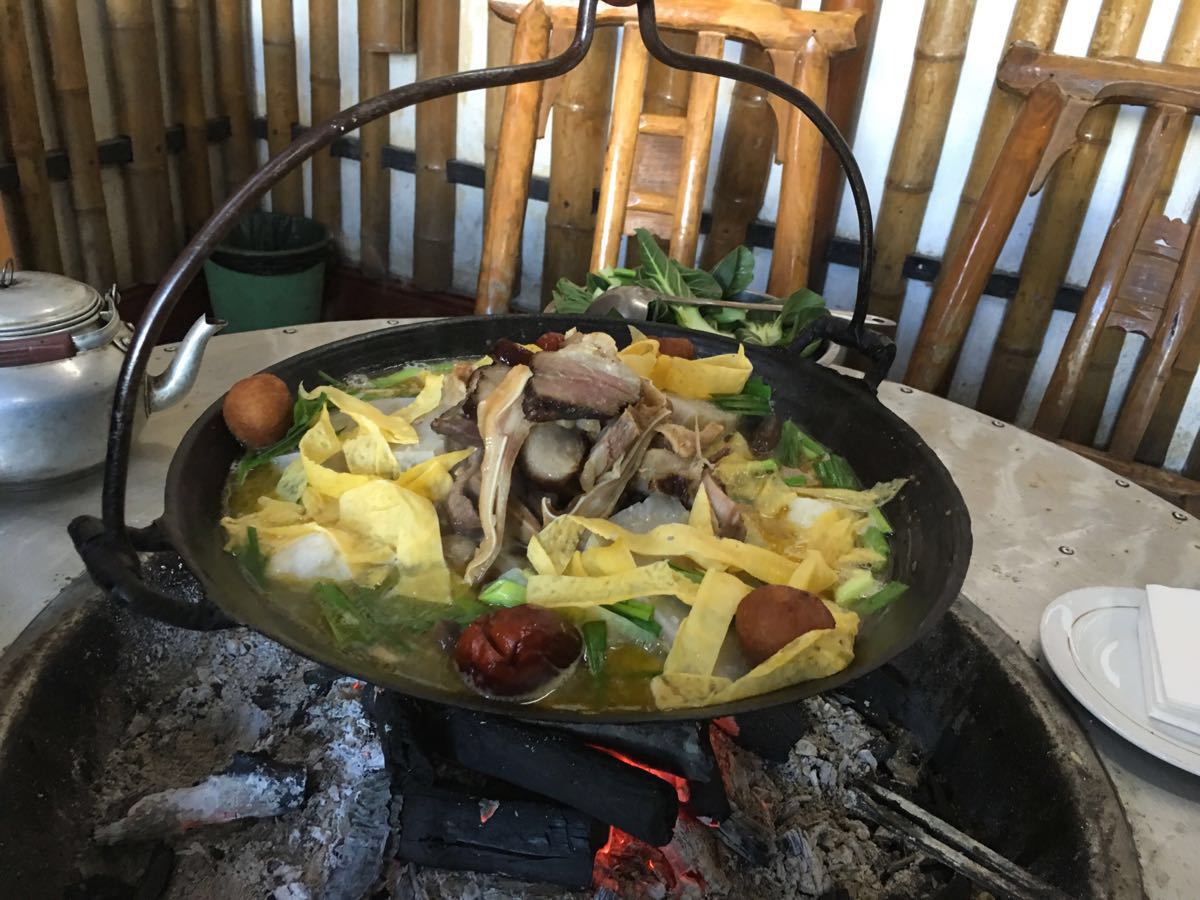
Diaoguo, the Luotian hanging pot, is the meal to put at the centre of a visit. An iron pot hangs above a wood fire or charcoal hearth, and diners sit around it as the broth simmers. The hanging frame allows the pot to be raised or lowered above the heat. It is both a way of cooking and a way of gathering: on a cool mountain evening, the fire warms the room while everyone shares the same pot.
In one traditional preparation described by a Luotian chef in a Xinhua interview, white radish cooks in a broth made with cured pork. Kelp, fried tofu, cured pork trotter and cured pork are layered above it, followed by fish balls and meat cake. Other kitchens use different seasonal combinations. Ask what is in the pot before ordering, especially if you avoid pork or need to limit salt; the name diaoguo describes the hanging-pot tradition, not one fixed recipe.
Chestnuts are another well-known Luotian specialty. In season they appear roasted or steamed, as snacks or alongside meat and vegetables. Mountain kitchens also use bamboo shoots, mushrooms, leafy greens, poultry and preserved ingredients. Availability changes with the harvest and the kitchen. Communicate dietary restrictions early and carry a translated card for serious allergies.
Meals can become part of a recovery-friendly itinerary when they are paced properly. Eat after rest, avoid forcing a large banquet after a long appointment and allow time to sit comfortably. A host can often prepare simpler dishes if asked in advance. For companions, the local table provides a cultural experience even when the patient needs a smaller or softer meal.
When Luotian is appropriate after medical care
A mountain stay may be appropriate for a stable visitor who has received medical advice, can manage the proposed level of walking and knows what to do if symptoms change. It can support rest, gentle movement, sleep routine, family time and a change of environment. It should be scheduled only after the clinical team confirms that travel, transfers, stairs, altitude, temperature and activity are reasonable.
The trip should be postponed or redesigned when there is uncontrolled pain, fresh post-operative restriction, open wound care, fever, unstable blood pressure, new neurological symptoms, significant dizziness, a high fall risk or a need for frequent medical observation. A coordinator should be comfortable saying ‘not this time’. A city-based hotel near the hospital, a shorter countryside visit or a later return may be the better plan.
For international visitors, the practical details matter as much as the scenery: who carries the documents, who translates at check-in, where medicines are stored, how dietary needs are communicated, how long the vehicle ride will be and what happens if rain closes a trail. This is why a Luotian programme should be planned as a flexible route with alternatives, not sold as a rigid package.
A thoughtful way to experience Luotian
Luotian rewards visitors who leave room in the day. See one mountain properly instead of rushing through three. Walk for twenty minutes and stop before fatigue changes the mood. Eat a local dish slowly. Let a clear morning and a rainy afternoon be different experiences rather than problems to be defeated. For a family travelling with a patient, the most successful itinerary may contain separate options: a ridge view for one person, a village meal for another and a quiet room for the person who needs recovery.
We help international guests organise medical records, coordinate Wuhan or local appointments, translate practical questions and build a Luotian itinerary only after suitability is confirmed. The photographs show Bodaofeng, the Hubei side of Tiantangzhai and Luotian diaoguo, with an individual source under each image. We do not present a landscape as a medical treatment or promise that travel will improve a condition. Luotian offers a slower setting, local food and time with family.